Louvre Pyramid
- Location
- Paris, France
- Year
- 1981
- Typology
- Museum
- Materials
- Glass, Steel, Metal cladding
- Context
- Egyptian Revival Architecture, Modernism
- Map
- Open location
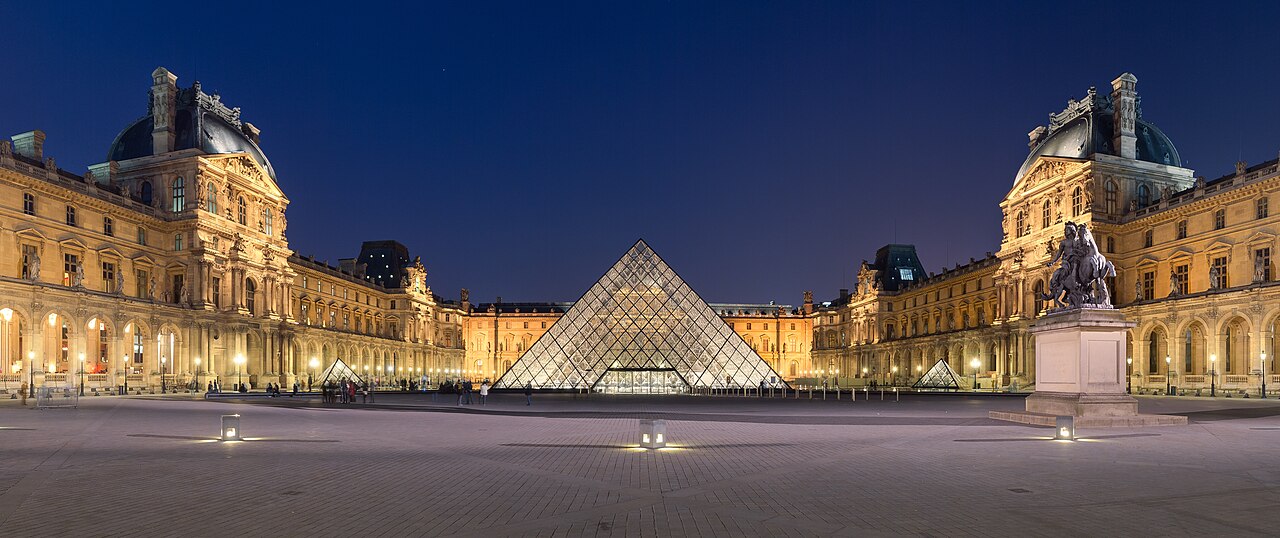
The Louvre Pyramid is a large glass-and-metal entrance way and skylight designed by the Chinese-American architect I. M. Pei. The pyramid is in the main courtyard of the Louvre Palace in Paris, surrounded by three smaller pyramids of the same style which also serve as lightwells. A companion Inverted Pyramid also provides light to underground passageways of the Louvre. The large pyramid serves as the main entrance way to the Louvre Museum, allowing light to the below ground visitors hall, while also allowing sight lines of the palace to visitors in the hall, and through access galleries to the different wings of the palace. On three sides are low modernist triangular reflecting pools with fountains. Completed in 1989 as part of the broader Grand Louvre project, it has become a landmark of Paris and a symbol of the museum.


